
By Shehu Uthman
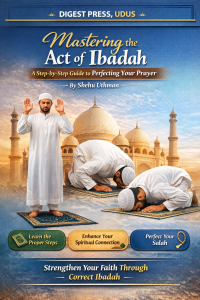
Salah, the daily Islamic prayer, remains one of the most fundamental acts of worship in Islam, it embodies discipline, humility, and a direct connection between the servant and Allah. Understanding its proper performance is therefore essential for every Muslim
The prayer begins with the Takbeeratul Ihram as the opening declaration, “Allahu Akbar” (Allah is the Greatest), while standing upright. In congregational prayers, the Imam pronounces this audibly, while those following recite it quietly. At this moment, the worshipper raises both hands to the level of the shoulders or ears, with fingers held together.
It is important to note that all pillars and obligatory acts of the prayer should be recited audibly enough for the individual to hear themselves. After the opening takbeer, the worshipper places the right hand over the left, either on the wrist or forearm, and fixes the gaze on the place of prostration, reflecting humility and attentiveness.
The prayer continues with opening supplications which are reported to be authentic, such as “Subhaanaka Allahumma wa bi Hamdika wa Tabaarakasmuka wa Ta”ala Jadduka wa la ilaaha ghairuk” (You are Glorified, O Allah, and Praised; Your Name is Blessed; Your Majesty is Exalted, and none has the right to be worshipped but You), followed by seeking refuge in Allah from Satan (A‘udhu billahi min ash-shaytanir-rajim) and reciting Bismillahir-Rahmanir-Rahim, all done quietly. Thereafter, Surah Al-Fatihah is recited, which is essential in every unit (rak‘ah) of the prayer. Additional verses from the Qur’an may follow, with the Imam reciting aloud in Fajr, Maghrib, and Isha, and quietly in Dhuhr and Asr.
The worshipper then bows (ruku‘) with the declaration “Allahu Akbar,” placing hands firmly on the knees, keeping the back straight, and aligning the head with the body. In this position, one recites “Subhaana Rabbiyal-‘Adheem” (Glory be to my Lord, the Most Great) at least three times.
Rising from bowing, the worshipper says, “Sami‘a Allahu liman hamidah” (Allah hears those who praise Him), followed by “Rabbanaa wa lakal-hamd” (Our Lord, to You belongs all praise) upon standing upright. These should be recited at their proper moments during movement and stillness.
Prostration (sujood) follows, beginning with “Allahu Akbar.” In this position, the worshipper prostrates on seven parts of the body: the forehead and nose, both palms, both knees, and the toes of both feet, all directed towards the Qiblah. While prostrating, one recites “Subhaana Rabbiyal-A‘laa” (Glory be to my Lord, the Most High) at least three times.
Between the two prostrations, the worshipper sits briefly and supplicates, saying “Rabbighfir li” (My Lord, forgive me), with the option of adding further supplications seeking mercy, guidance, and provision. The second unit of prayer is then performed in the same manner as the first.
After completing two units, the worshipper sits for the first Tashahhud, reciting.
“At-tahiyyaatu lillaahi was-salawaatu wat-tayyibaat…”, affirming the oneness of Allah and the Prophethood of Muhammad (peace be upon him), while raising the index finger.
For prayers consisting of three or four units, the worshipper stands to complete the remaining units, reciting Surah Al-Fatihah quietly. The final sitting (Tashahhud) is then observed, followed by sending blessings upon the Prophet (peace be upon him) and concluding with supplications.
The prayer ends with the Tasleem: “As-salaamu ‘alaykum wa rahmatullah,” two times turning first to the right and then to the left.