
By Yisau Babatunde
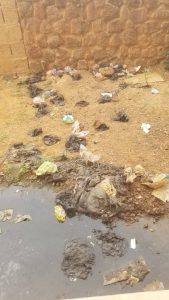
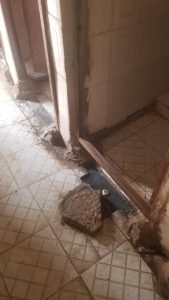
Despite an increment in accommodation fees from N15,090 to N24,000 students living in hostels under the management of Usmanu Danfodiyo University Sokoto (UDUS), say their living conditions remains poor, unsafe, and largely unchanged.
Digest Press findings across multiple halls of residence have exposed persistent water scarcity, undrinkable water, poor sanitation, broken facilities, and neglected environments, which have raised questions about accountability and how the hostel fees are being used.
UDUS, one of the oldest federal universities in Northern Nigeria, operates several hostels for male and female students like the Jibril Aminu Hostels (Block A–H), Bakassi Hostel, and the female halls of residence like Zamfara Hostel, Kano Hall, IBB Hall, and FBI Hall. Although the hostels are different in terms of name and structure, students residents across these halls face similar challenges that undermine the justification for the recent fee hike.
Mubarak, a resident of Jibril Aminu Hostel, said the hostel environment does not reflect the increased amount students now pay. According to him, the surroundings are dirty and poorly maintained, while basic amenities are either inadequate or nowhere to be found.
“The water in this block is not good,” he said. “It is not drinkable, sometimes looks dirty, and has a bad taste. There is stagnant water at the entrance of the hostel, which attracts mosquitoes and flies. That alone is a health risk.”
Mubarak added that the electricity supply in the block is unstable, forcing students to move from room to room in search of power to charge their devices.
“Only about five or six rooms have stable electricity. Some time ago, my friend was bitten by a scorpion during a power outage because the room was dark. He spent almost a week receiving treatment, which affected his studies.”
Zakariya, another resident, described the toilets and bathrooms as unhygienic and poorly maintained. The sorry state of the water tanks in his block has forced him to resort to buying sachet water because he feared he might get infected. “I can’t remember the last time the tanks were washed. The toilets are terrible, there’s a strong smell, and you can always find feces at the edge of the toilet sink,” he said.
He told this reporter that when he saw white fumes coming out of his buttocks, he resorted to practicing open defecation.
He added that several bunk beds in the block are rusted or damaged, with no visible repairs. As a result, students improvise by using bed frames to hang clothes and shoes, further reducing limited living space.
A visit by this reporter to Jibril Aminu Block A showed toilets emitting strong odours even a few metres away before he reached the toilet. Inside, only a few bathrooms were still usable, while others had broken doors, leaking roofs, or were abandoned. Stagnant water was observed around the toilet areas whenever soak-away pits filled up, which now house mosquitoes.
Other residents described similar challenges. Jamiu said stagnant water surrounds the water tank serving the block due to poor drainage. “The place is always dirty,” he said.
“The water doesn’t drain, and the smell alone tells you it is not safe. The bathrooms are leaking seriously from the rooftop, making them unusable except at night when the floor dries a bit.”
According to him, the situation becomes worse during the rainy season when stagnant water spreads across the surroundings.
Zoo Block: A Hostel in Decline
Residents of Zoo Block told this reporter that it is one of the most neglected hostels on campus. An occupant described persistent foul smells linked to open defecation around the back of the hall, stagnant water at the entrance, and clogged gutters filled with waste.
The water reservoir serving several Jibril Aminu hostels was also observed to be poorly maintained. Every student came to the reservoir with his bucket and dipped it in, no matter how dirty and unclean it might be.
According to the World Health Organization (WHO), contaminated water and poor sanitation are directly linked to the spread of diseases such as cholera, diarrhoea, dysentery, hepatitis A, typhoid, and polio.
In 2022, the WHO reported that at least 1.7 billion people globally still use drinking water sources contaminated with faeces, making microbial contamination one of the greatest risks to public health. It also estimates that unsafe drinking water causes about 505,000 diarrhoeal deaths every year, largely due to poor sanitation and contaminated water supplies.
Saheed, a graduate and former resident of the block, said the hostel was once one of the best on campus before years of neglect. According to him, the block was once one of the most comfortable places to stay on campus before neglect and pollution gradually took over.
“Back then, Zoo Block was actually a very cozy place to live,” Saheed said. “The surroundings were neat, and you could tell there was regular cleaning and supervision. The grasses were trimmed, the gutters were not blocked, and there was no offensive smell around the hostel,” he told Digest Press.
For Saheed, Zoo Block became like that because management stopped maintenance. Once facilities break down and management fails to fix them, and when water channels get blocked, no one clears them. Over time, dirt accumulates, and the place becomes polluted. “It didn’t collapse overnight; it was gradual neglect,” he added.
He added that the current accommodation fee increment would have been reasonable if it came with visible improvements.
This reporter decided to visit Zoo Block to see the state of things firsthand, and the condition of the hostel was damning. The block now houses dusty rooms, cobwebs, overgrown weeds, and water tanks placed beside open gutters containing waste. Broken bottles, refuse, and human waste were observed around the surroundings, giving the area the appearance of a dumpsite rather than a student residence.
Female Hostels Face Similar Challenges
Conditions in female hostels mirror those of male hostels. Tawakalit, a resident of Kano Hall, said water scarcity is a major challenge. She lamented that the entire hall depends on a single well, and if occupants refuse to wake up early, she risks not taking a bath before lectures that day. “Many of us don’t trust the water for drinking,” she said.
Whenever there is no water in the reservoir, occupants need to either fetch water at the Jibril Aminu Masjid or go into nearby villages to get water, which is difficult, especially for those with early morning lectures.
Electricity shortages, she added, force students to cluster in rooms with power, increasing the risk of theft.
Memunat, a resident of FBI Hall, also told this reporter that the hostel environment is dirty, with stagnant, foul-smelling water at the entrance, which in turn attracts flies and mosquitoes, causing health complications.
She said the environment is always smelling because of Yaro boys and girls practicing open defecation within the hostel. For Memunat, whenever it rains, the odour becomes unbearable.
According to a National WASH survey by UNICEF and the National Bureau of Statistics, nearly half of Nigerians lack basic sanitation services, and 46 million still practice open defecation. These challenges mirror the poor hostel facilities reported by students at UDUS.
An environmental and public health expert, Olabode Ajia, warned that poor water sanitation conditions are very dangerous and pose serious risks to students.
He said undrinkable water causes diseases like typhoid, cholera, and diarrhoea. If care is not taken, students’ academic performance can be hindered due to frequent illness.
He added that stagnant water and poorly maintained sanitation facilities encourage the spread of infections and disease-carrying mosquitoes. “If hostel fees are increased, facilities must meet basic public health standards,” Ajia said.
Authorities Respond
Dr. Aliyu Umar, the Dean of the Students Affairs Division, pointed out that all affected areas have been noted and that management is already doing everything possible to restore and renovate all dilapidated facilities within the hostels.
“The management is committed to providing a conducive environment for the students. The repair process is ongoing, and all will fall in place in a few weeks’ time.”
“We are urging students to make proper use of and care for the facilities at all times. Poor usage will destroy them, no matter how many times we repair them.”
Zarah, the Welfare Director of the Students’ Union Central Transport Committee (SU CTC), acknowledged the poor hostel conditions. He assured this reporter that a formal report has been submitted to the Student Affairs Division, stating that access to clean water is their administration’s top priority.
“If you go around the hostels, some short-term improvements like minor plumbing and cleaning are already ongoing before the session resumes fully. The school maintenance team will fix them.”
She added that larger projects, including water supply restoration and toilet renovations, are expected in the coming weeks or months.
Illegal Occupancy, Weak Enforcement Worsen Hostel Decay at UDUS
Findings by Digest Press have also revealed another factor worsening hostel conditions: widespread illegal occupancy across several halls of residence.
Interviews conducted around Jibril Aminu Hostels show that many students live in hostel rooms without paying accommodation fees. Abdulrasheed, an illegal occupant, said the lack of action against illegal occupancy has given everyone the temerity not to pay their hostel fees, since he later found out that there are many illegal occupants and no measures were taken against them, so he decided to join the flow. “Who would pay for what others are getting for free,” he said.
He added that periodic raids by hostel officials rarely lead to lasting action, as occupants often return once enforcement ends.
Millions in Potential Revenue Lost
Illegal occupants are depriving the university of millions of naira each year, funds that could otherwise be used for maintenance, sanitation, and facility upgrades.
In a typical three-storey Jibril Aminu hostel block with 35 rooms, each room accommodates eight students. At N24,000 per student, a room would generate the sum of N192,000, which means a fully paid block would generate about N6.72 million annually. With four such blocks, the total would amount to approximately N26.88 million.
Similarly, two-storey blocks with 24 rooms could generate about N4.61 million each per year. With five such blocks in Jibril Aminu Hostel, this would amount to approximately N23.04 million.
Altogether, Jibril Aminu Hostels alone could generate an estimated N49.92 million annually if all occupants paid their accommodation fees. Such funds could improve water supply, sanitation, and maintenance if transparently managed.
Muhammad, another illegal occupant in one of the blocks, said illegal residency has become routine.
When he needed accommodation as a new student, he joined a room with fewer occupants after asking if they could help him get accommodation. He later realised that none of the occupants had paid.
He recalled an experience during a hostel management raid when their door was locked, but officials broke the lock, and they continued living in the same room without fear.
“The man raiding on that fateful day asked us to come to his office but we didn’t go there, we just continued living there, hoping he would come back one day but he didn’t show up.”
Illegal occupancy is not limited to male hostels. Adegoke Rukayat, a legal resident of Kano Hall, said similar practices exist in female hostels, where illegal occupants enjoy full access to facilities.
“Even though there might not be as many as the males, we also have illegal occupants. Most of them feel too big and proud, trying to dictate how things should be done in the room,” she said.
Recounting an experience her friend had with an illegal occupant, she said it left horrible and bad memories.
“She often stole foodstuffs, bags, shoes, even clothes sometimes. Funny enough, she will deny it outrightly until she is caught red-handed. My friend sent her to the parking lot even though other occupants were begging on her behalf.”
UDUS management vows crackdown on illegal occupants. Prof. Aliyu said. Prof. Aliyu said the university has developed new strategies to identify and remove illegal occupants from the hostels.
According to him, management is determined to ensure that only duly allocated students occupy university hostels.