
By Yisau Babatunde
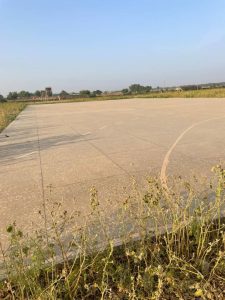
On a calm harmattan morning, the Taekwondo court in Usmanu Danfodiyo University Sokoto (UDUS) felt empty and cold, with the cemented floor dusty and tattered. A single training bag lay on the floor, looking forgotten in the quiet morning. Jamiu (surname withheld over fear of victimization), a Taekwondo athlete, described the situation for the sport at UDUS as discouraging and unsafe.
“We don’t have a fixed place to train. Sometimes we are asked to leave because another sport is scheduled. It affects our consistency and performance,” he said.
Jamiu added that limited institutional support has forced many Taekwondo athletes to abandon training. “With female athletes among us, more consideration should be given. At the last NUGA tournament in Jos, we struggled to represent the university because lack of funds became a major barrier,” he told Digest Press.
Even though UDUS offers many sports recognized by the Nigerian University Games Association (NUGA), not all of them have designated facilities. Despite students paying sport maintenance fees every year, an investigation carried out by Digest Press has revealed that the sporting facilities across the campus remain largely dilapidated, under-equipped, and neglected, raising serious concerns about accountability, transparency, and institutional commitment to student welfare.
Martial arts such as Taekwondo and Judo lack permanent training spaces and are forced to share open courts meant for basketball. Even these borrowed spaces come without basic equipment.
Sodiq, a recent graduate and a boxer, shared a similar experience with this reporter. He said athletes often rely on personal contributions to buy basic equipment for training.
While recalling his time as a student, Sodiq explained that he and other boxers usually contributed their own money to purchase the few affordable kits they could manage. He said the equipment was often not enough for everyone.
“Most times, we shared gloves and protective kits, making others to be lacking behind, since we can be sparring at the same time,” Sodiq said.
He explained that there was no permanent space given to them; no boxing ring and no gym facilities, which made him and other boxers resort to early morning runs and throwing silent punches with no one watching.
He added that the only way he continued with the training was because of his passion, encouragement from coursemates and little remuneration collected whenever he went for boxing competitions.
Rising Fees, Declining Facilities
Findings by Digest Press have revealed a large amount of money generated for sports over the years. Calculations show that a total of ₦372,944,000 was generated from the 2021/2022 to 2025/2026 academic sessions. Despite this, many sports facilities across the university remain in a poor and neglected state.
These figures were arrived at from the data obtained from the Times Higher Education World University Rankings. The data shows that UDUS has a Full-Time Equivalent (FTE) student population of 23,553.
Based on this figure, the university generated an estimated ₦47,106,000 from sports maintenance fees in the 2021/2022 session. In 2022/2023, revenue rose significantly to approximately ₦70,659,000 following the fee increase, before climbing further to about ₦84,790,800 in the 2023/2024 academic year. The same amount was realized in both the 2024/2025 and 2025/2026 sessions, as the fee structure remained unchanged.
Why Sports Infrastructures Matters
Beyond academic metrics, global health authorities underscore the wider health impact of sports participation on young people. According to the World Health Organization, regular physical activity such as organized sports significantly reduces the risk of chronic diseases – including heart disease, diabetes and several cancers – while improving muscular, bone and mental health, yet one in three adults and a staggering 81% of adolescents worldwide are insufficiently active.
WHO’s global adolescent activity analysis, based on data from 1.6 million students, further reveals that over 80% of school-going youth fail to meet the recommended 60 minutes of daily physical activity, placing their physical and cognitive development at risk.
A research by UNICEF shows that sports participation boosts educational outcomes, leadership, self-esteem and empowerment, reinforcing that athletic engagement benefits both body and mind.
While these show that sport participation strengthens academic performance and psychological well-being, the neglected of sporting facilities in UDUS has continued to undermine a proven tool for students development.
Designated Facilities, Visible Decay
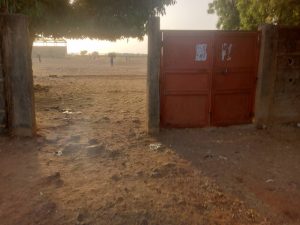
At the UDUS volleyball court, located around the student hostel areas, investigations observed rusting goalposts and a repeatedly damaged net, which players said is often repaired only when training sessions are scheduled.
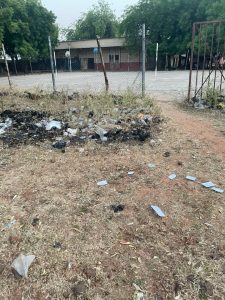
Evelyn, a volleyball player, told this reporter that the court is not conducive for proper training, citing both its size and location. The small court, according to her, now houses different kinds of waste that they have to pick up and clean before they can begin to use it.
Beyond this, the minimal institutional backing the team received is not encouraging. “Most of the time, we fix things by ourselves. From cleaning the court to adjusting the net, we rely on personal contributions just to be able to train.”
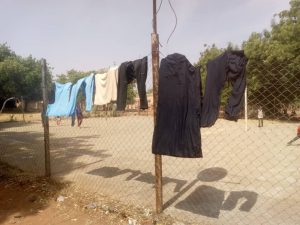
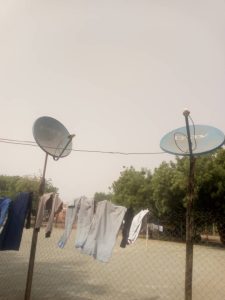
A site visit confirmed the poor state of the volleyball court. Most of the nets surrounding the facility were broken and rusted, leaving the area open to unrestricted use by outsiders. The surroundings were littered with nylons, plastic bottles, and potato waste.
Clothes were seen hung on the rusted nets to dry under the sun. Inside the court, Yaro boys moved about freely, playing football and throwing pebbles at one another. Even more striking, one of the metal posts meant to demarcate the volleyball court had been repurposed as a DSTV antenna for a nearby football viewing centre.
Conditions at the basketball court reflect the same pattern of neglect observed across other sports facilities at UDUS. Kunle, a basketball player, identified poor maintenance as the major challenge, lamenting the state of the first basketball court, which has now been completely abandoned and left in disrepair.
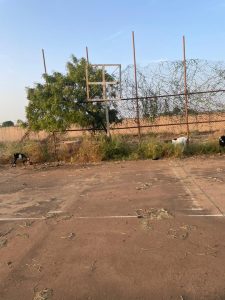
According to him, the court was fragile and poorly maintained, with faulty components often removed without replacement, gradually rendering the facility unusable.
“Before the court was relocated from behind the male hostels to the stadium area, we handled most of the maintenance ourselves,” he said. “But now, the court is no longer given much attention.”
He described the current condition of the abandoned facility as alarming. “The place is becoming more of a dumpsite than a basketball court,” Kunle said. “Broken parts are left unattended, and waste is frequently dumped around the area.”
A visit by this reporter to the abandoned basketball court corroborated his account. The facility was engulfed by a foul stench of animal and human waste, littered with various forms of refuse, and surrounded by overgrown weeds. Inside the court, the net was completely missing, while the goalpost, though still standing, was partially buried under weeds.
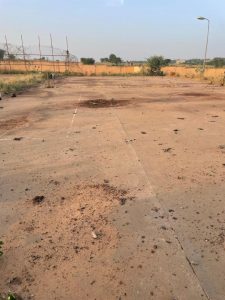
Even the basketball court still in use by players falls short of standard requirements. The floor is excessively hard and bare, contributing to frequent injuries, while the lone goalpost has no net, even during training sessions.
Haleemat, another basketball player, attributed several injuries sustained during training to the poor construction of the court.
“Many injuries could have been avoided if the court was properly constructed,” she said. “The floor is too hard, and sometimes we even have disputes with people who use the place for skating or other unrelated activities.”
She added that the lack of proper fencing or access control has made it easy for non-athletes to freely use the facility.
“Yaro boys often come in the afternoon to use the court for their games,” Haleemat told Digest Press. “Most times, we meet feces, a strong smell of urine, or broken bottles on and around the court, especially since it is surrounded by overgrown weeds.”
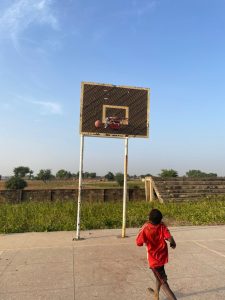
Main Stadium Left to Decay
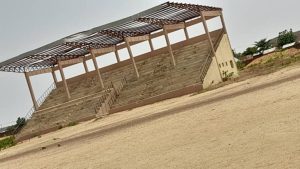
Despite being the most prominent and important sporting facility on campus, the UDUS football pitch at the center of the sports complex has been left in a state of neglect. Findings show that the pitch falls far below acceptable standards. It is neither grassed with perennial ryegrass nor fitted with the grass carpet commonly used on standard football fields. Instead, the surface is a bare, hardened ground scattered with pebbles and overgrown shrubs, offering little visual appeal and posing safety concerns for players.
Kabiru, a student footballer, described the condition of the pitch as discouraging and dangerous, noting that it exposes players to constant risks of injury and reflects a wider pattern of neglect of sports facilities on campus.
“The pitch is not safe at all,” he said. “Training sessions are often cut short because the surface is too hard and uneven. Playing matches here is far below what should be expected in a university environment.”
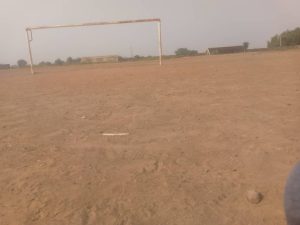
Kabiru noted that the poor state of the main bowl not only affects performance but also dampens players’ morale, undermining efforts to develop sports and nurture talent within the institution.
According to him, both villagers and students living around the stadium vicinity now use the facility as a pedestrian route, either to access the hostel minimart or while heading home, which he described as inappropriate for a sports complex.
“The stadium has always been a dangerous place at night,” he said. “Some of the villagers, mostly young boys, stay around dark corners to snatch phones, bags, or money. If a student resists, it can result in stabbing.”
He further noted that the dressing room meant for players has been abandoned to misuse.
“The dressing room designed for players to change has turned into a smokers’ den, a refuse dumpsite, and an avenue for lovers to engage in illicit acts at night,” he added.
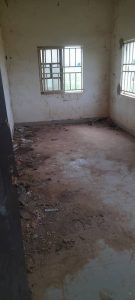
Shuaib, another student footballer, also highlighted the deteriorating condition of the goalposts, field structures, and other facilities, describing them as far below acceptable standards.
“The goalposts are rusty and unstable. The nets are only fixed during inter-state or inter-faculty competitions, and even then, they are usually dirty and torn,” he said. “Several parts of the field structures are damaged. Sometimes we have to improvise before we can even train or play. It doesn’t feel like a university sports facility, it feels neglected and unsafe.”
He explained that the condition of the pitch varies dangerously with the seasons. During the harmattan period, the field becomes bare and excessively hardened. Once the rains begin, however, it turns soft, muddy, and waterlogged, with stagnant pools forming across the pitch.
“The rainy season coincides with the second semester, when faculties organize Dean’s Cup tournaments,” Shuaib told Digest Press. “Since this is the only available football field on campus, it becomes unavoidable. As a result, injuries occur easily because the pitch becomes slippery and filled with mud.”
At one corner of the stadium entrance stood a well frequently used by nearby villagers to wash motorcycles, tricycles, and clothes. The wastewater from these activities flowed unchecked toward the field, spreading across its edges and creating pools of stagnant, foul-smelling water.
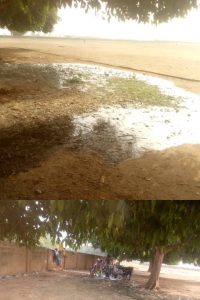
When this reporter visited the field to confirm the players’ accounts, the findings revealed a pitch in severe neglect, bare patches of hardened soil, scattered pebbles, overgrown weeds, and puddles of stagnant water. The goalposts were visibly rusted and unstable, while surrounding structures showed clear signs of long-term deterioration. The condition of the facility left little doubt that students’ complaints about unsafe and substandard playing conditions are well-founded.
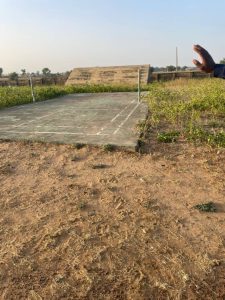
Other sports facilities on campus, including the tennis court, badminton courts, and track lanes, are also in poor condition. Boundary lines have faded significantly, and although the surfaces are cemented, they were poorly constructed. Several sections have begun to crack, creating hazards and inconveniences for the athletes who rely on these facilities for training and competition.
Expert Raises Alarm
Mr Taiwo Oke, a sports expert, expressed that when the University sporting facilities are unsafe, such conditions pose serious risks to student athletes. “When students train and compete on unsafe facilities, their health and future in sports are constantly at risk,” he said.
Mr. Taiwo told Digest Press that inadequate facilities weaken participation and performance across campus. With limited access to safe and standard training spaces, students lose motivation, competitive standards drop, and the institution struggles to perform well in inter-university competitions.
Beyond athletics, he argued that the state of sports infrastructure reflects the university’s priorities.
“This is not just about sports,” he concluded. “It is about accountability, safety, and the commitment to providing an environment where students can thrive.”
Officials React
When this reporter visited the Dean of Students’ Affairs, Prof. Umar Aliyu for comment, he directed him to the University Coach, Mr. Abdullahi Usman Ribbah.
Speaking with DIGEST PRESS, Mr. Ribbah expressed deep dissatisfaction with the current state of the university stadium, describing it as far below the standard expected of a sporting facility. According to him, virtually every component within the stadium falls short of what qualifies it as a functional and modern stadium.
Mr. Ribbah further noted that although the Central Bank of Nigeria (CBN) had previously provided funding for sports development, the outcome of that intervention was minimal, resulting only in the construction of a mini-stadium located behind the student hostels.
He lamented that even the facility has since suffered neglect, citing poor maintenance culture, apparent lack of commitment from the university management, and the absence of adequate security measures as factors that have continued to put the existing sports facilities at risk.
“As part of the NUGA executives, I can’t even propose that my university should host the tournament because we are ten times far from what they require from the host university.”
When giving out the possible solution to the neglected culture of the management to the deplorable conditions of the sports facilities, he urged the pressboards to use their pen in speaking for positive change while holding both the students union body and management accountable.
“Students are the end users of these facilities, it is appropriate for them to ask what their money is being used for? Afterall, the sports fee attached to the tuition fees must be paid by all students,” he concluded.