
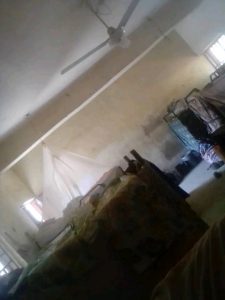
Ramadan is meant to be a period of peace, reflection, and spiritual devotion. However, at UDUS, this year’s Ramadan began under a cloud of frustration. Instead of quiet nights of study and worship, students on campus have been grappling with an unexpected and prolonged power outage that began on 15th of February 2026, a day before the commencement of the holy month of Ramadan, which has left the entire university community in darkness.
On the 21st of February, 2026, the university management released a circular informing the university’s residents about the general blackout across the campus. According to the notice, the outage was caused by a fault in the university’s 2.0 solar power system, which serves as the major source of electricity within the university community since its commission in 2022. The circular assured the university community that efforts were being made to resolve the issue as quickly as possible.
However, weeks later, the situation remains largely unresolved. Although electricity occasionally returns for two or three hours after several days of outage, such brief and irregular supply offers can only offer a little relief. Consequently, daily life on campus has become increasingly difficult, particularly for students, and staff who rely heavily on electricity for both academic and personal needs.
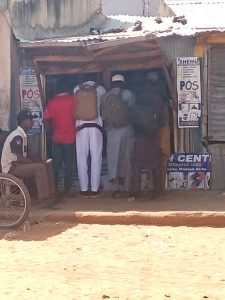
For many Danfodites observing the Ramadan fast, the situation goes far beyond mere inconvenience. Electricity is central to their daily routine. Students depend on it to charge phones, laptops, torches, and other devices necessary for reading at night, completing assignments, and staying academically productive. In the absence of reliable power, many students are forced to patronize commercial charging stations within and around the campus. Even then, space is often limited, and the cost of charging devices places an additional financial burden on students who can barely afford such expenses.
Moreover, the situation has also affected access to basic necessities. Some students now buy water regularly for their daily needs, which adds to the financial burden. During Ramadan, when students wake up before dawn for suhoor and remain active late into the night for prayers and study, the absence of electricity makes these routines even more exhausting and sometimes impossible.
As examinations approach, anxiety among students continues to rise. A stable and supportive learning environment is essential at such a critical period in the academic calendar. Unfortunately, the current circumstances make it difficult for many students to focus fully on their studies.
To be fair, the university management did acknowledge the problem and communicated the cause of the outage. Nevertheless, communication alone cannot substitute for practical and timely solutions. What students now hope to see is visible progress and a clear timeline indicating when normal power supply will be restored.
Another concern many students share is the long delay in fixing the solar fault. When technical problems like this are not addressed quickly, they can develop into much bigger issues that may affect the entire system. Situations like this highlight the importance of timely maintenance and quick technical intervention.
There are already examples of similar problems in other universities. At Bayero University Kano (BUK), for instance, the university’s 3.5-megawatt solar power project, reportedly worth about ₦5.6 billion, began experiencing serious operational challenges, which finally collapsed, just two years after it was installed in 2019. If the current fault at UDUS is allowed to linger for too long, many students fear that the solar system could deteriorate further or even shut down completely.
After all, a university community is not only a place for lectures and examinations; it is also a living community where students and staff should be able to study, rest, and thrive under reasonable conditions. Reliable electricity, therefore, should not be considered a luxury but a basic necessity for a modern academic environment.
From the Desk of News and Sport Editor
Safwan Abubakar