

By Hawa’u Malami
The last thing Fatima* expected while resuming this semester was to meet a new tenant in a room she was already occupying. When the 200 level Danfodite arrived for the new academic session at Usmanu Danfodiyo University, Sokoto, her plan was to head to her hostel in Binji, Jamila House, one of the private accommodations Inside the campus. As usual, she planned to clean and settle in for the session.
But this time, the cubicle she once called her home had already been given to another student, without any prior notice.
Since her first year, someone had always helped her pay because she was unfamiliar with the system. In her second year, the caretaker, Mubarak asked if she wanted to retain the room. She agreed.
“That’s the practice,” she said. “If you agree, he takes your number and calls when it’s time to pay. That’s how it has always worked.”
This session, however, things changed without notice. The caretaker collected their numbers and assured them they could keep their rooms, but never called when payment was due. At the same time, rumours spread that private hostels might be demolished, so many students delayed payment.
Instead of contacting them, Fatima alleged that the caretaker quietly reassigned her room.
When she heard about it, she immediately sent her rent of ₦100,000 Moments later, the caretaker told her she had to add an extra ₦20,000 to retain the room, which she did. The problem did not end there. She was also asked to temporarily accommodate the new students who had already been assigned her space.

“I had no choice. I added the money. He asked me to accommodate the girls temporarily because he was ‘sorting things out’ for them,” she said.
For nearly a week, Fatima and her new roommates shared the already small room.
“Even to pray, we had to go outside,” she said.
Just as she expected the issue to be resolved, another drama unfolded when one of the new occupants returned with an older male relative and the caretaker. The next day, Fatima was summoned by the security unit, where the caretaker offered her another room. She refused, saying it was uninhabitable.
Her refusal cost her the room.
Although her payment was refunded, Fatima alleged that the caretaker misrepresented the situation to the security, claiming she requested the refund. That same night, she was forced out.

“Wallahi, it disturbed me mentally. I couldn’t eat properly. I couldn’t concentrate in class. I stopped attending night classes. I cried a lot. I kept asking myself how I would survive,” she said.
A Widespread Problem
Fatima’s experience reflects a broader issue in private hostels around Usmanu Danfodiyo University, where students allege sudden room reallocations, hidden charges, and poor communication. With limited university accommodation, many students often depend on private hostels.
In the University of Lagos, for example, fewer than 8,000 official hostel spaces reportedly serve nearly 40,000 students, pushing many into expensive private housing where rents range between ₦250,000 and ₦950,000 per session.
A similar situation exists in UDUS, where students in private hostels reportedly pay between ₦70,000 and ₦180,000 per session for a single room, depending on location and facilities.
Despite the high costs, Digest Press gathered complaints about poor sanitation, faulty facilities, unmanaged waste, and unsanitary toilets.
“Today, Tomorrow” — No Refund
Another student in the same compound described similar issues.
“I have lived here for two years. I usually pay early. But this time, we heard the school advised students not to pay private hostels because of planned demolition. So we waited,” she said.
During the break, she received a call that her belongings were about to be moved out. When she contacted the caretaker, he told her someone else had paid for the room.
“He offered me another room, but it was too small,” she said.
She had already sent ₦100,000 for her original room and has been trying to get a refund for over a month.
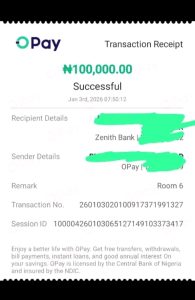
“Till today, he hasn’t refunded me. He keeps saying ‘today, tomorrow.’ The new room is not worth the money I paid,” she added.
She also complained about poor communication.
“There is no system to inform tenants. No notice. No group. He avoids complaints and doesn’t take responsibility. Many students here are facing similar issues.”
Different Compound, Same Power Imbalance
In another private hostel, Mubaraka* narrated her experience.
“In my first year, we paid ₦110,000 — ₦100,000 rent and ₦10,000 caretaker’s fee. This year, my landlord asked for ₦110,000 again. I confirmed and sent it,” she said.
Later, she discovered others had paid ₦100,000.
“I asked for my ₦10,000 back. He told me to forget it. That money is not easy to get.”
She alleged the situation escalated when the landlord accused her of insulting him in Yoruba. “I don’t even speak Yoruba. I went with my friend who also doesn’t understand Yoruba. I never insulted him.”
According to her, the landlord demanded her account details and asked her to vacate mid-semester.
“I begged him. I knelt down. My friends begged too. People were watching. I was crying.”
She never recovered the excess payment. She also raised concerns about unstable power supply, which makes water inaccessible.
“If anything spoils, they tell us to fix it ourselves. Yet we pay the same rent as students in better compounds,” she said.
Tenant’s Eviction: What Does the Law Says?
Abdulrasheed Hammad, an Abuja based legal practitioner, emphasized the importance of proper documentation in tenancy arrangements. According to him, any tenancy should be backed by a written agreement, not just verbal promises, as the agreement defines the rights and obligations of both landlord and tenant.
“Eviction must follow due process under the Recovery of Premises Act. A landlord cannot just wake up and evict a tenant,” he said.
For yearly tenancies, he explained that landlords are required to give six months’ notice, properly served before the current rent expires. Even after expiration, tenants cannot be forcefully removed without a court order.
“Taking the law into one’s hands can amount to criminal trespass,” he warned.
As a way forward, he advised affected students to organize themselves, appoint representatives, and seek legal support. He also encouraged them to submit formal petitions and to understand their rights, noting that tenants can take legal action and seek damages when those rights are violated.
Authorities React
The Students’ Union Chairman, Mr. Tasi’u Aminu, said the Union was previously unaware of some of the reported abuses, especially sudden room reallocations.
“We were not aware of some of these issues,” he said.
He assured students that complaints would be formally forwarded to the appropriate authorities, including the Dean and the Deputy Dean in charge of private hostels.
Speaking to Digest Press, the Dean of Private Hostels, Professor S. Y. Tsagem said the university was hearing about the issues for the first time.
“If students do not report problems, how can we intervene? There is a Students’ Union representative and house captains. Once issues are reported, we can act,” he said.
He urged students to report issues early rather than endure exploitation in silence.
Efforts
Efforts were made to obtain responses from the landlords and caretakers. The reporter specific reached out to Mubarak, one of the caretakers several times through calls and visits, but he declined to comment.