
By Maryam Muhammad
For those of us living in the hostels and surrounding villages of Usmanu Danfodiyo University Sokoto (UDUS), the struggle for child education in nearby villages is something we witness almost every day. Villages within the university host many children who face enormous challenges in accessing education and living a life of dignity.
Across several villages around the university environment, it is common to see young girls, often referred to locally as yarinya, and boys known as yaro growing up in difficult conditions. While a few manage to attend school and reach secondary level, many others remain outside the classroom, lacking the basic support and opportunities needed to pursue education.
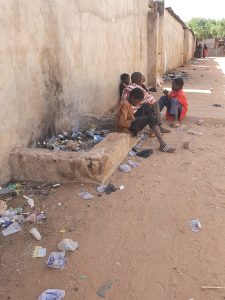
A significant number of these children work as domestic helpers, locally called maidens, or engage in other forms of menial labour simply to survive. For many of them, life is harsh and uncertain. Some live in unsanitary environments and are sometimes forced to pick food from refuse dumps. These conditions expose them to serious health risks, including diseases such as cholera, while also affecting their psychological and emotional well-being.
It is particularly heartbreaking to see children as young as five, six, or seven years old beginning their day as early as 6:00 a.m., working long hours and often begging for food. At an age when they should be in classrooms learning basic skills, many are instead burdened with responsibilities far beyond their years.
For students residing around these communities who are fortunate enough to pursue education, the experience can sometimes be discouraging. Some encounter stigma or misunderstanding from individuals who view educated youth as detached from community traditions. Such perceptions make it harder to cultivate an environment that truly supports education and development.
Understanding the Root Causes
Poverty remains one of the most significant barriers to education in these communities. Many parents struggle to afford school fees, uniforms, and basic learning materials. As a result, education is sometimes seen as a privilege rather than a right.
According to a 2023/2024 report by the National Senior Secondary Education Commission (NSSEC), Sokoto State recorded the highest number of school dropouts in Nigeria, with 11,339 students leaving school, the majority of them male. The figure highlights the alarming scale of the education crisis in Sokoto State.
Early marriage further worsens the situation, especially for girls whose education is cut short when they are married off at a young age.
Cultural and social perceptions also contribute to the challenge. In some households, there is still a belief that a girl’s education ends in the kitchen or that schooling is unnecessary for children expected to start working early in life.
Interestingly, when one finds the opportunity to speak with some of these children, many express a genuine desire to attend school. Unfortunately, the barriers surrounding them often deny them that opportunity.
Another major obstacle is the lack of adequate educational infrastructure. In several nearby communities, schools struggle with overcrowded classrooms, limited teaching materials, and poor learning environments, making it difficult for children and teenagers to access quality education.
The Dangerous Consequences of Neglect
The consequences of leaving children uneducated are far-reaching. Without access to education, many children remain trapped in cycles of poverty, poor health, and exploitation. Ignorance and lack of opportunity can also push young people into behaviours that threaten both their future and the safety of others.
Recently, DIGEST PRESS illustrated this concern in an editorial article that highlighted incidents in which some yarinya girls reportedly attacked female students within hostel premises. While such incidents may have multiple causes, they also reflect the broader social challenges that arise when large numbers of young people grow up without access to education and guidance.
Situations like these raise serious questions about the long-term consequences of neglecting child education within communities living in academic institutions.
A Path Toward Change
Addressing these challenges requires urgent and coordinated action. Community awareness programmes can help educate parents on the importance of educating both boys and girls. Government intervention is equally critical in providing scholarships, improving school facilities, and enforcing laws that protect children from exploitation and early marriage.
Non-governmental organizations also have a role to play by offering mentorship programmes, educational resources, and safe learning spaces for vulnerable children. Above all, there must be a gradual shift in societal attitudes to recognise education as a fundamental right for every child.
If action is delayed, generations of children will continue to face hardship and missed opportunities. But with collective commitment, awareness, and support, we can change the narration from one struggle to one of hope.