
By Oyelowo Khalid
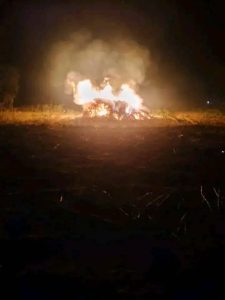
At about 9:30 p.m. on Thursday, as most residents of Jabo village in Tambuwal Local Government Area of Sokoto State prepared for sleep, a loud explosion shattered the calm. Within minutes, fear spread across the community. Families grabbed what they could and fled their homes, uncertain of what might come next.
Saddiq Sadiq, a resident of Yabo Local Government, Sokoto State, did not believe the news at first. From his home in Magacci Sarki, Dagawa Ward, reports of an explosion in nearby Jabo village sounded unreal, until familiar faces began arriving, frightened and displaced.
“At first, I didn’t believe it. But when I saw some of my friends from that village leaving their houses and seeking refuge, I knew something serious had happened. That night, I couldn’t sleep peacefully.”
According to Saddiq, the fear of another strike has unsettled residents across nearby communities.
“They came to our village for protection because they are scared of another attack. I really hope this is the last time, because we no longer feel safe,” he added.
Although no casualties were officially recorded, the explosion linked to a joint military operation involving the United States and the Nigerian government. This has left residents traumatised and displaced, raising fresh concerns about civilian safety during counterterrorism operations.
This Jabo village incident, adds to a growing body of evidence showing the risks civilians face during air-led counterterrorism operations in Nigeria and across Africa.
On January 9, 2024, Human Angle had reported that civilians bore the brunt of a military air raid targeting Lakurawa terrorists in Gidan Bisa, area of Salame, Sokoto State. The report stated that an airstrike carried out on December 24, 2025, killed several civilians, while the intended militant targets were reportedly not hit.
Similarly, several data from human rights organisations and research groups further underscores the risks. Between 2017 and 2023, more than 300 civilians were killed in accidental airstrikes carried out by the Nigerian Air Force. Another recent report documented over 943 civilian deaths from drone strikes across six African countries between November 2021 and November 2024.
More Woes, More Tales
Hearing about the blast in Jabo village, Sulaimon Habeeb, who lives in Kware Local Government Area, felt a chill of fear as the news reached him, he couldn’t shake the feeling that no distance was far enough to keep him safe from the danger unfolding in Sokoto.
“Even though the affected village is far from us, Sokoto is the target,” he said. “When attacks are linked to military operations, anything can happen. We are all worried.”
Habeeb, a non-indigene resident in the state, appealed to authorities to ensure restraint in future operations. “Justice should be tempered with mercy,” he said.
For others, the fear has altered personal decisions. Aminu* (not his real name), a student at the University of Maiduguri, said he has postponed plans to return home after learning that his hometown was affected.
“When I saw the news, I told my family I wouldn’t be coming home. I’m still in school, and I’m afraid. I’m too young to die.”